(From International World Games Association website, visit on www.theworldgames.org)
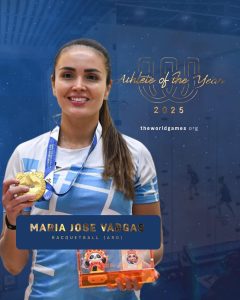
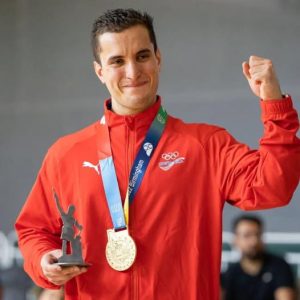
Huge congratulations to Bolivia’s Conrrado Moscoso for securing the title of The World Games Athlete of the Year 2023!
In the final round, Bolivia’s Racquetball star ended up winning with an amazing total of 75,389 votes, defeating Luisa Rizzo (ITA) from Air Sports who came second with a total number of votes of 55,834.
Moscoso (28), and Rizzo (21), led the race from the start of the final round, and were very close going into the final 24 hours. They have left third and fourth places to Germany’s Marius-Andrei Balan (33) and Khrystyna Moshenska (34), nominated in the Latin dance discipline, from the DanceSport category and Ju-Jitsu ace Faisal Al Ketbi (36), from UAE.
The German dancers, performing together since 2015, collected 43,560 votes, while Faisal Al Ketbi, The World Games 2017 gold medallist, recorded 36,824 votes.
Once again with this yearly award there has been an equal distribution of votes, showcasing a very balanced gender representation. Two men and two women are in the top 3 (with one couple), while four men and three women complete the top-10 final ranking. These results align with the IWGA’s mission to promote gender equality.
IWGA President José Perurena congratulated all the finalists on their success: “On behalf of the International World Games Association, and personally, I would like to congratulate our winner and all the athletes in the Top 10 for their outstanding performances. Congratulations for their performances in this race; but they also need to be recognised and saluted for the constant, tireless hard work and sacrifices that they make to reach the highest possible level in their sport. This Award is a fantastic opportunity to celebrate the incredible records and achievements of The World Games’ male and female athletes from all over the world. Athletes are the beating heart of our community, and this trophy symbolises our gratitude.”
After the first round which ended on 22 January 2024, the ten best athletes with the most votes went into the final round, with the voting phase ending on Wednesday 31 January 2024 at 12 noon GMT. The winner, together with the silver and bronze finishers, will receive a trophy as well as a certificate. The candidates were nominated by their respective federations.
Inspire the younger generation to get moving
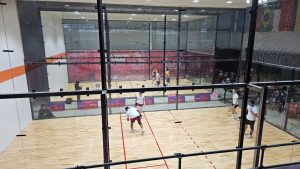
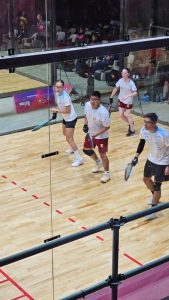
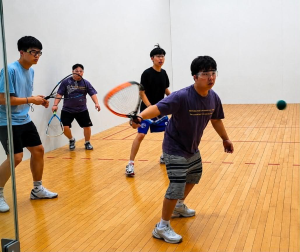
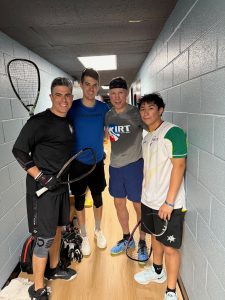
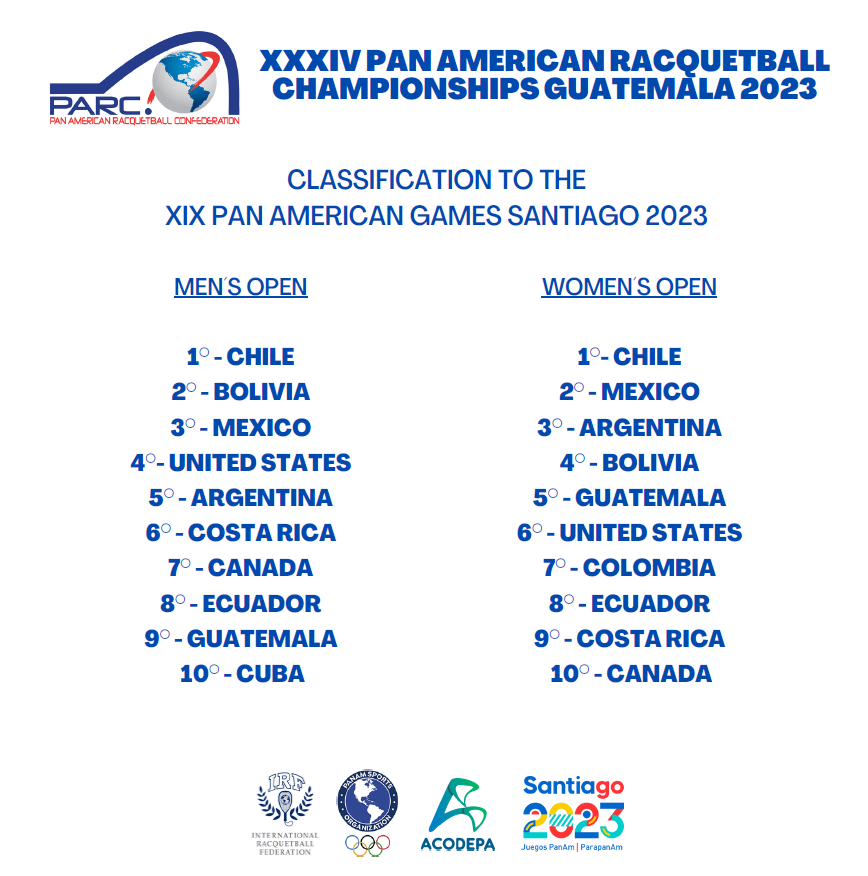
Conrrado Moscoso has had a highly successful and glittering career in Racquetball. He is the current International Racquetball Federation (IRF) men’s singles World champion, and currently leads the Racquetball World Rankings. He won two gold medals and one bronze at the latest edition of the Pan American Games in Santiago, Chile.
Immediately after the announcement, winner Moscoso said: “I am incredibly grateful and honoured to win this Award. For myself of course, but also for the international Racquetball community that I wish to represent with this title. I want to advocate for my sport in my country, my continent and throughout the world because the sport deserves worldwide publicity. My goal is to inspire the younger generation to get moving and find a passion for sport, possibly Racquetball!”
IRF President Osvaldo Maggi spoke with great enthusiasm: “On behalf of the global Racquetball community, I would like to wholeheartedly congratulate our champion Conrrado Moscoso of Bolivia on this tremendous achievement. We are so proud of him for winning and we would like to thank our supportive fans that made it possible. We look forward to seeing what the next edition of The World Games in Chengdu brings!”
A great honour!
For 21-year-old Luisa Rizzo, flying her FPV drone at speeds of over 160km/h around an intricate obstacle course is much more than a simple hobby. The remarkable Italian pilot came third in the FAI World Drone Racing Championships in Namwon, Korea in 2023. She also entered the Guinness World Record Book for clearing 56 gates in 60 seconds on live TV when aged just 16.
Happy about her second place, Rizzo said: “I am delighted with this final result. It is a great honour, not only for me but for the entire air sports community, to receive this distinction. It was thrilling to follow the voting evolution since the start of the year, and I had no idea that I was going to get so much support from The World Games community. I am endlessly grateful for the mobilisation and encouragement, and I wish I knew who voted for me, in order to thank them one by one. I would also like to thank IWGA for their promotion of non-Olympic Games Sports.”
World Air Sports Federation President David Monks echoed the young athlete’s excitement: “We would like to extend our sincere congratulations to Luisa Rizzo for her second place. The depth of her talent and outstanding performances in one of our disciplines is undeniable and brings us all together. We are honoured that she gets to be recognised in her specific field.”
Growing popularity of DanceSport
Right from the beginning of their union, Balan and Moshenska became one of the most successful and mesmerizing couples in the world. They are German Champions and have been finalists in every major competition in the world. Since 2020 they are #1 on the World Dance Sport Federation World Ranking List and continue to dominate the international Latin Dance scene.
Thrilled about their third place, the pair commented: “We are incredibly grateful to be second runners-up in The World Games Athlete of the Year Award. We hope DanceSport will get more recognition all over the world, because it is an artistic sport which makes you feel and look good.”
World DanceSport Federation President Shawn Tay commented: “I’m delighted to witness Marius-Andrei Balan and Khrystyna Moshenska’s remarkable journey towards the third place in the IWGA Athlete of the Year Award. I’ve known Marius and Khrystyna for over a decade and have seen them persist through all the triumphs and hardships in their career. Their global acclaim is in recognition of their sheer hard work, discipline, and dedication, as well as an important indication of the growing popularity of our beautiful, artistic sport. We, at the WDSF, are very proud of Marius and Khrystyna, and thankful for the recognition from IWGA.”
Dreams are fuelled by determination and can turn into reality
The Abu Dhabi native Ketbi, finished fourth in the race among 22 top athletes. He is the 2015, 2016, 2017 and 2019 World Champion in Ju-Jitsu in the -94kg category. He also won TWG 2017 gold medal in Wroclaw, Poland, in the same category, and grabbed TWG 2022 golds in the -85kg group and Open Men discipline in Birmingham, USA.
Ju-Jitsu Faisal Al Ketbi commented: “I want to express my heartfelt gratitude to the visionary leadership of the UAE for their limitless support, which made this achievement possible. I also extend my deepest appreciation to all my supporters who have been with me on this incredible journey. This achievement is a testament to the dedication, hard work, and endeavour that has fuelled my passion for Ju-Jitsu. I dedicate this achievement to my teammates, coaches, family, and fans who have stood by me every step of the way. This achievement is not just mine; it’s a collective effort, and I am overjoyed to be able to honour my country with this recognition. Together, we’ve proven that dreams fuelled by determination can turn into reality. I hope this win serves as a beacon of inspiration, encouraging aspiring athletes to pursue excellence and contribute to the sport’s continued success on the global stage.”
To close the 2023 season, a total of 22 athletes were running for The World Games Athlete of the Year title. As a reminder, in the voting for 2022, the individual winner was Valeria Cardenas (COL) from the World Flying Disc Federation (WFDF).
The International World Games Association (IWGA) is a non-profit-making international sports organisation recognised and supported by the International Olympic Committee. The IWGA comprises 39 International Member Sports Federations. It administers and promotes The World Games (TWG), a multi-sport event held every four years that features around 35 sports on its programme. The next edition of TWG will be in Chengdu (CHN) from 7-17 August 2025. 5,000 participants from more than 100 countries are expected to take part in this 12th edition. The latest Games were hosted by Birmingham, Alabama (USA).
.
For more information, please contact the IWGA Media and Communication team: press@iwga.sport, Tel: +41 21 311 12 97, or visit our web site.